
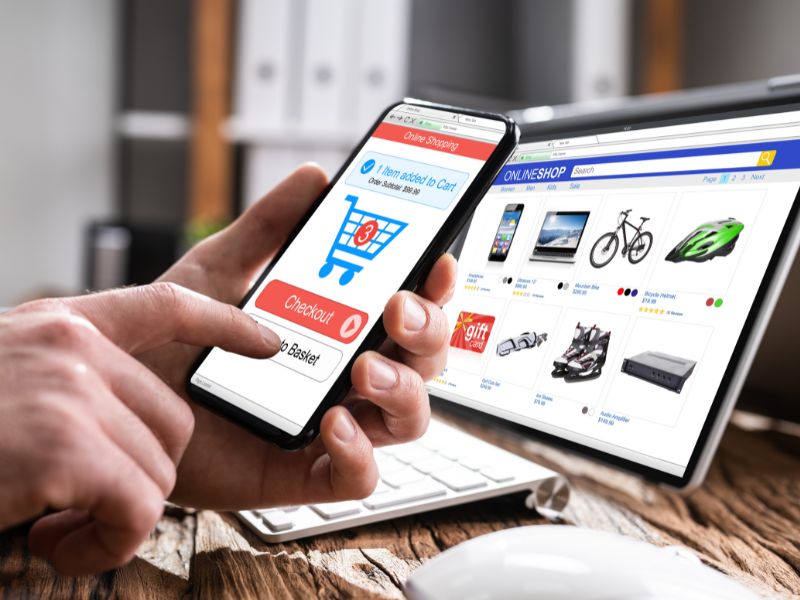
An online store can give customers another way to browse and buy from your business. It also creates work: keeping stock accurate, answering questions, processing payments and delivering orders. The right decision depends on whether you can serve a defined customer group reliably and cover the cost of doing so.
Start with the customer and the range
Ask which products customers already request, what they need to know before buying and which areas you can serve. A focused range can be easier to manage than placing every item online at once. Use product descriptions and photographs that answer the questions you normally handle in person.
Check the work behind each sale
- Stock: who updates availability when a product sells online or in the shop?
- Orders: who confirms payment and prepares the parcel?
- Delivery: which locations, charges and realistic timeframes can you support?
- Questions and returns: who responds and records the outcome?
- Exceptions: what happens when stock is wrong, an address fails or a parcel is delayed?
Being open for online orders outside shop hours is different from promising round-the-clock staff support. Set customer expectations that your business can meet.
Budget beyond the build price
Allow for payment-provider charges, packaging, delivery, platform or hosting costs, maintenance, product preparation and staff time. Compare the likely order value with the cost of acquiring and fulfilling that order. Do not assume that adding a website automatically removes premises or labour costs.
Our online store cost guide helps separate software, implementation and ongoing services. Discuss charges using the actual provider and package selected.
Choose a suitable first step
If customers mainly need opening hours, stock enquiries or tailored quotations, a clear catalogue or enquiry website may be a useful starting point. If the products and delivery process are standard enough to transact online, a store may make the next step easier. For appointments or individually scoped work, review selling services online before copying a physical-product checkout.
Connect the online and physical experience
Keep product information consistent and make collection instructions clear where collection is offered. Avoid showing live stock unless the update process can support it. Our retail channel planning guide covers the operational questions.
Define what success would mean
Choose a practical goal, such as completing a controlled first range of orders or reducing repeated product questions. Review paid orders and fulfilment effort alongside visitor numbers. A larger market does not guarantee demand for a particular shop; the South African ecommerce context is background for your decision.
To prepare the brief, follow our store launch plan. For the available design and product-loading options, see SDDS ecommerce websites.